Standard units for general crews
The default job-site rental: a single portable toilet or a row, serviced on a recurring schedule. Most framing, concrete and finish crews use these. See standard portable toilet rental.
Job-site portable toilets and handwash stations for Houston remodels, tower fit-outs and suburban builds.
Fastest: call (888) 351-0294. Or send this and we call you back.
Construction crews in Houston rent portable toilets by the job: delivered before the crew starts, serviced on a schedule and removed at the end. Houston Porta Potty Rental connects you with an independent local provider who delivers, services and removes units. OSHA 1926.51 is the federal construction sanitation standard, and crew size drives the count.

A job site without a toilet does not run for long. Crews leave to find one, work stops, and a site supervisor ends up solving a plumbing problem on a day meant for framing. Renting portable units for the length of the build is the standard fix, and in Houston it covers everything from a single-family remodel in the Heights to a tower fit-out in Uptown.
The federal rule behind most job-site counts is OSHA 1926.51. As commonly summarized by rental guides, it asks for 1 toilet per 20 workers up to 200 workers and 1 per 40 workers beyond 200, with handwashing facilities provided near the toilets and the toilets kept sanitary. Treat those figures as indicative and check the current text with OSHA or your safety lead, because we do not tell any site that a particular unit count meets a rule.
Houston Porta Potty Rental is a call line that connects you with an independent local portable-sanitation provider. The provider delivers, services and removes the units; we do not. Call (888) 351-0294 with the site location, the crew size and how long the job runs, and we will connect you with a provider that covers your part of Harris County.
Never move, tip or empty a rented unit yourself, and never place units where they could be struck by a crane, a hoist or a vehicle. Servicing and relocation are the provider's job.
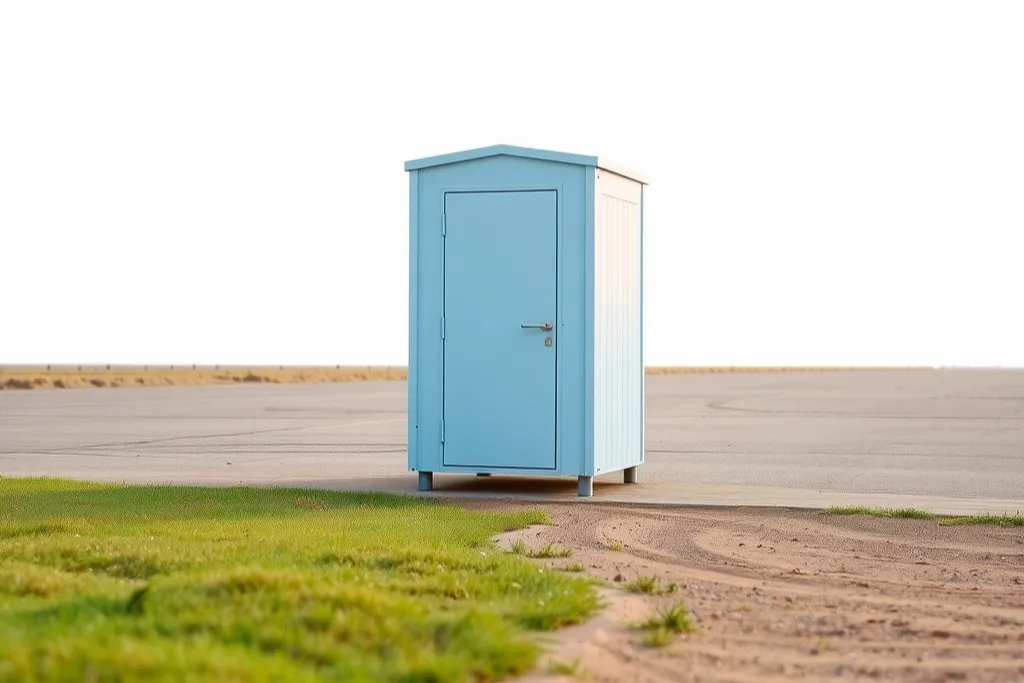
Give the call line the number of workers on a typical day, the number on the biggest day and how many weeks or months the job runs. The provider uses that to size the order.
A unit belongs where crews can reach it quickly and where a provider's truck can get a clean approach. Show the provider the gate, the staging area and any slope or soft ground.
OSHA's summary guidance asks for handwashing near the toilets. Ask for a handwash station with the first order, not after an inspection.
Your provider services units on a recurring schedule you agree up front. A larger crew or a hot month may call for more frequent visits.
When the work area changes or the job ends, the provider moves or removes the units. Do not tip, drag or empty a unit yourself.
A job-site rental is priced as a line on the project budget, and Houston-area guides disagree widely on what that line is. No dollar figure appears here. What changes the quote is the following.
| Job | Typical range | What it includes |
|---|---|---|
| Number of units | Follows crew size | The count rises with the number of workers on site |
| Length of the job | Weeks to months | Long jobs are quoted as a term; see the long-term page |
| Servicing frequency | Per visit schedule | Heat, a bigger crew or a busier phase can call for more visits |
| Handwash stations | Per station | Added next to the toilets |
| Delivery access and relocation | Depends on the site | Tight lots, gates and phase moves change the work |
Your provider quotes the real number once it knows the site, the crew and the schedule. For general background, read the Houston cost guide.
Rental guides summarize OSHA 1926.51 as 1 toilet per 20 workers up to 200 workers, then 1 per 40 beyond that, with handwashing near the toilets. Treat that as an indicative baseline: count your peak crew, round up and let the provider review the number.
The figure depends on how many workers are on site at once, not how many are on the payroll. A concrete pour that brings 60 people on one day needs a different order from the quiet weeks around it. Plan for the peak and ask the provider about adding units for it.
The same guidance asks for handwashing facilities near toilets and for toilets to be kept sanitary. Those two phrases are where the day-to-day work lies: a handwash station placed next to the units, and a servicing schedule that keeps up with the crew. Your safety lead is the right person to confirm the standard for your site. For a fuller walk-through, see the Houston construction toilet requirements guide.
Servicing frequency is set with the provider and depends on crew size, heat and use. One published guide says a unit left unserviced for three weeks is a citable OSHA violation. Treat that as a reason to agree a schedule up front, not as a rule for any one site.
Houston's own park guidelines call for cleaning and disinfecting at least twice a week depending on use, though they apply to city parks only. A construction site is not a park, but the idea that use sets the schedule carries across: a large crew in July heat fills and fouls units faster than a small crew in January.
Ask your provider how servicing is scheduled, what days it comes, and how to request an extra visit when a phase brings more people on site. The provider does the work; your job is to keep the schedule matched to the crew.
Remodels in neighborhoods such as the Heights and River Oaks work on tight or private lots, while Uptown and Texas Medical Center projects run large crews for long periods. Placement and access drive the first group; unit count and servicing drive the second.
River Oaks, developed from 1923 on 1,100 acres, is a neighborhood of large private homes that are frequently rebuilt or renovated. A unit on a large private lot is easy to site, but a neighborhood street is another story, so ask the provider about placement and how to keep access clear.
Meyerland, split by Brays Bayou, flooded in the Memorial Day 2015 storm, again in April 2016 and again in Harvey. Gut-and-rebuild and elevation work there brought long job sites with crews on them for weeks. Those are the sites where a unit rented for the length of the job and serviced regularly matters most. See Meyerland and long-term portable toilet rental.
Close enough that crews do not lose time walking, far enough that a truck can reach them without crossing active work. Firm, level ground matters, and so does keeping units away from hoists, crane swing and trench edges. Your provider can advise on access.
A provider's truck needs a clear approach and room to turn. On a tight Houston lot, that may mean a spot at the curb or in the driveway, and it may mean a conversation with neighbors or the city about the street frontage.
Units that block a gate, a fire lane or a delivery route cause trouble quickly. Walk the site with the provider's description in hand, and tell the provider when the layout will change so it can move the units.
Tell the provider as soon as the crew size or the schedule changes. Units can be added, moved or removed by the provider; availability for any specific day is the provider's to confirm. Do not try to move or empty units yourself.
Construction schedules slip, and a short delay or an early finish changes what you need. Raise changes with the provider in advance, because servicing visits and removal are on the provider's route.
The default job-site rental: a single portable toilet or a row, serviced on a recurring schedule. Most framing, concrete and finish crews use these. See standard portable toilet rental.
The Heights has Victorian homes, bungalows and craftsman cottages that are often renovated, and the area was listed on the National Register of Historic Places in 1983 as a Historic Multiple Resource Area. A remodel on a tight lot needs a unit that fits the driveway or the street frontage, and a provider who can place it without blocking access.
Houston's Texas Medical Center covers over 2 square miles with about 61 institutions, including 21 hospitals. Uptown has 23.6 million square feet of office space and Williams Tower, 64 stories and 909 feet. Projects like these bring multiple subcontractors and long schedules, and call for banks of units with servicing planned in advance.
An accessible unit or a handwash station is often added when a site expects visitors, inspectors or crews with mobility needs. See handwash station rental.
Houston's job-site mix is wide. The Heights, River Oaks and Bellaire bring remodels and rebuilds on residential lots. Uptown and the Texas Medical Center bring long schedules with big crews. Out in the suburbs, new builds put crews in open ground. A rental that suits one will not suit the next.
Houston summers run to repeated heat advisories, with temperatures at or above 105 F and heat index values near 112 F. A crew on a roof or a slab in that weather uses restrooms and handwashing more often, which is worth building into the servicing conversation.
Call any hour and explain what is going on. You get a clear price before any work starts.
Not sure if you're covered? Check your ZIP code.
Multi-month portable toilet rental for Houston builds, plant work and long outdoor projects, with a servicing schedule that fits.
Standalone handwashing stations for Houston events, food service areas and job sites, delivered and serviced by a local provider.
Single-stall portable toilets for Houston job sites, yard parties and block events, delivered, serviced and removed by an independent local provider.
What a servicing visit covers, how often units are serviced and what to do when a unit fills, smells or runs out of supplies.
The federal construction standard, OSHA 1926.51, is commonly summarized as 1 toilet per 20 workers up to 200 workers, then 1 per 40 after that, with handwashing facilities near the toilets and units kept sanitary.
Before a Houston storm, call the provider that serves your site and ask what they do with units ahead of high water and wind.
Pick the term that matches how long people will really be on site, then pick a servicing schedule that matches how many.
Rental guides summarize OSHA 1926.51 as requiring handwashing facilities near toilets and toilets kept sanitary. Check the current text with OSHA or your safety lead. A handwash station ordered alongside the units is the straightforward way to have handwashing in place.
The common summary of OSHA 1926.51 is 1 toilet per 20 workers up to 200 workers. That is indicative, not a promise of compliance. Count your peak crew, round up and ask the provider to review the number against how long shifts run.
Often, if a truck can reach the spot. Tell the provider about the driveway, the street frontage and any overhead lines or trees. The provider decides what it can place, and availability depends on its units free for your date.
A published guide says a unit left unserviced for three weeks is a citable OSHA violation. Beyond any citation, it is a problem for the crew. Agree a schedule up front and call the provider promptly if a unit fills early.
Your rental terms with the provider say. Ask about damage, theft and relocation charges before delivery, and keep units away from equipment paths. Do not try to repair or empty a unit yourself.
The provider moves them, usually on a route stop. Never drag or tip a unit. Tell the provider when the work area will change and where the new spot is, and ask what notice it needs.